
STS-87
A machine named for a rescue. Here is the build, broken down to the board — and the receipts behind “built honestly.”
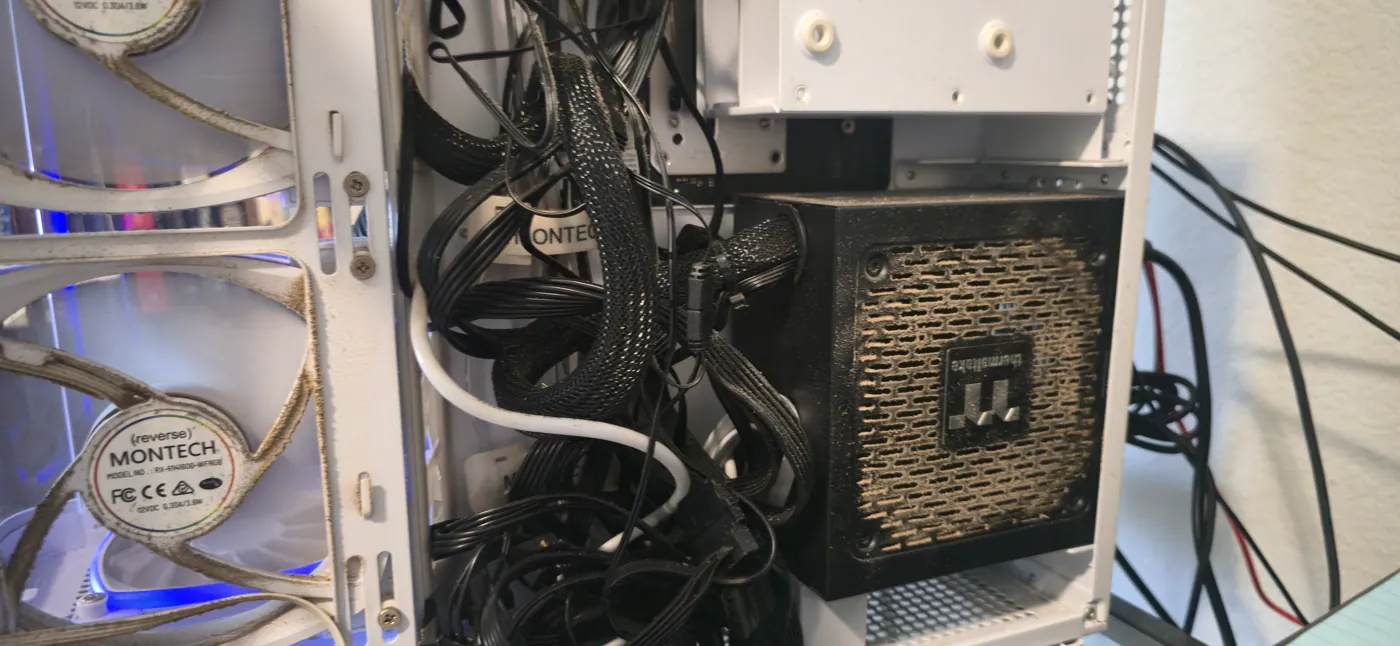
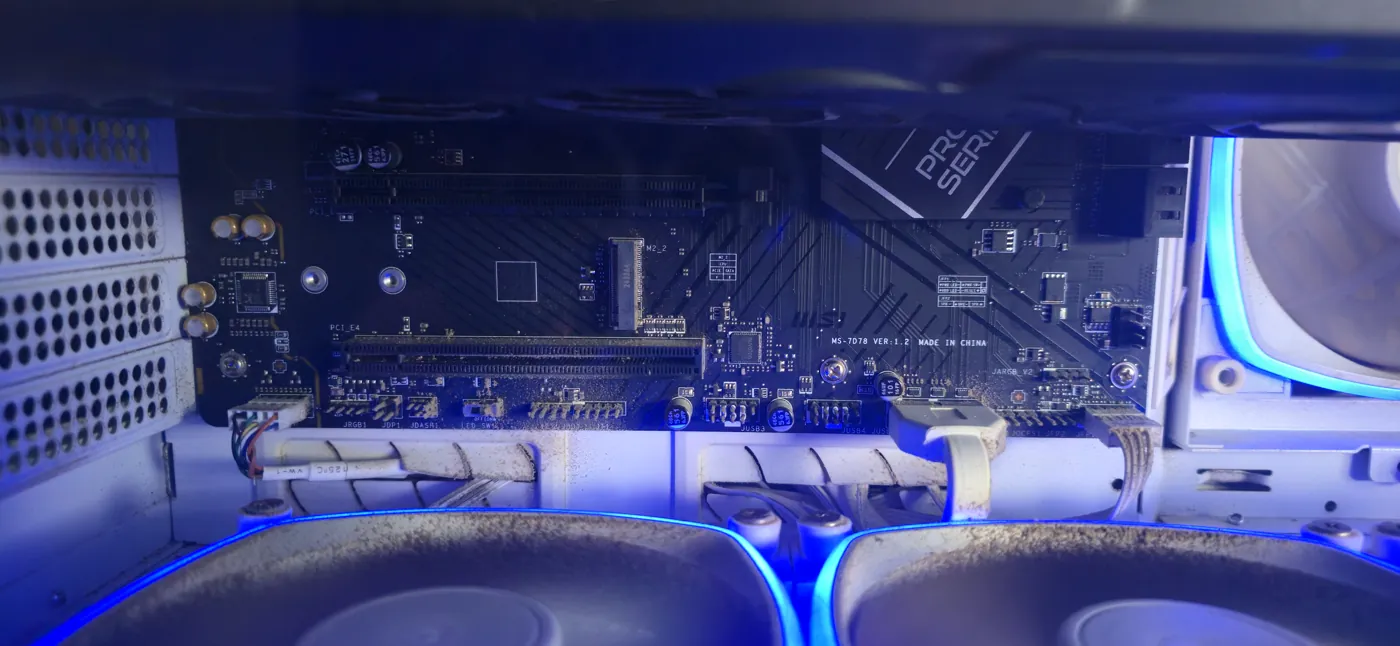
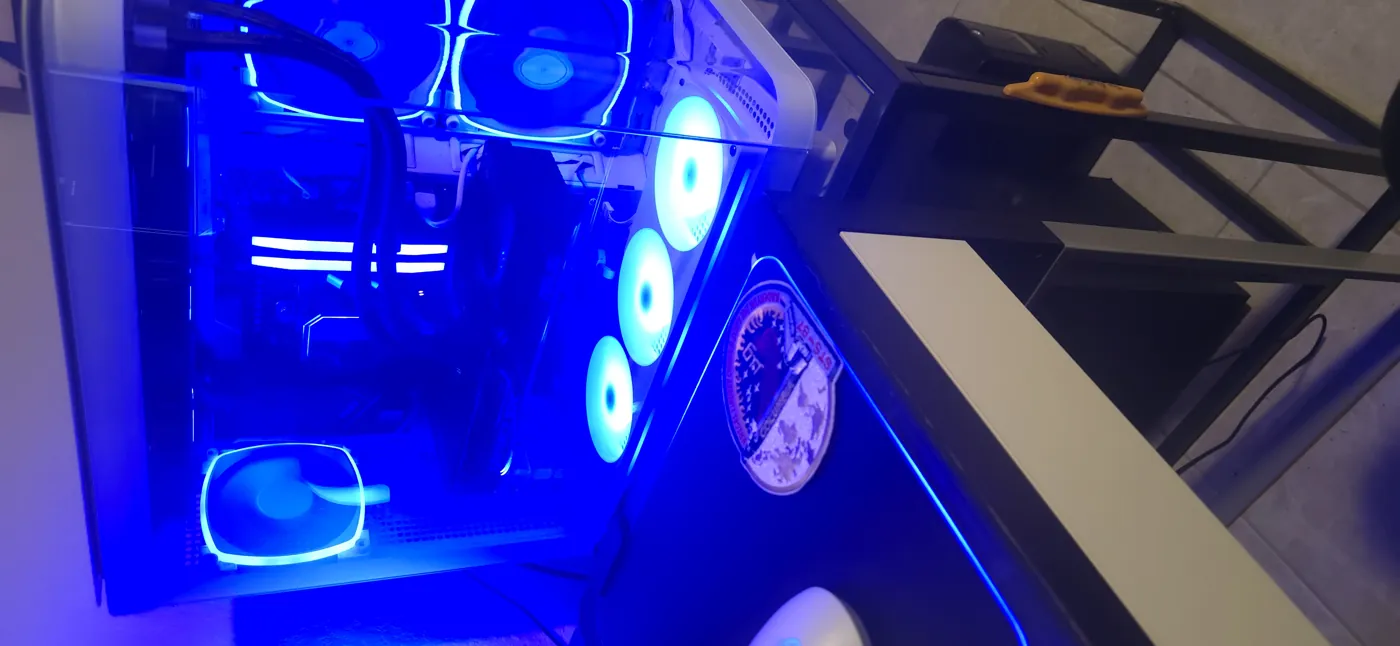
Torn down to the board, then lit: the guts, the MSI board, and the finished machine — with its mission patch. Built April 2026.
The mission
On 19 November 1997, the Space Shuttle Columbia went up as STS-87 — fifteen days, 252 orbits, 6.5 million miles. Aboard was Kalpana Chawla, on her first spaceflight: the first India-born woman to fly to space, serving as the mission’s prime robotic-arm operator. She used that arm to release SPARTAN-201, a free-flying satellite built to study the Sun’s corona.
It tumbled. The satellite failed to hold its orientation after deployment, and two of her crewmates — Winston Scott and Takao Doi — went out into the payload bay and caught it back by hand. (Doi’s was the first spacewalk by a Japanese astronaut.) In February 2003, Chawla was lost with the rest of her crew aboard Columbia on STS-107. The shuttle program numbers its missions; we borrowed one, and the weight that comes with it.
The name on the glass
The workshop machine is called STS-87 — mission patch on the case, the way a crew stitches one to a flight suit. The pictures up top are its build: torn down to the board, wired, then lit. For the record — a Ryzen 7 9700X, an RTX 4070 Ti SUPER, 32 GB of DDR5-6000, a Samsung 990 PRO. White case, blue charge, glass side.
A machine that’s going to run the build — all day, every day, the engine under everything this house gives away — has to prove it can hold. So we proved it, and we logged every number.
The receipts
Sixty minutes of OCCT — a synthetic torture load, all cores, no mercy. The CPU topped out at 57.9°C. The throttle limit on this chip is 95°. That is thirty-seven degrees of headroom, with the boost clock held at 5.5 GHz the whole hour, and zero throttle events — not few, zero, across every test since the clean install. The voltage regulators, which run 60–75°C on comparable boards, sat at 45.
And the honest version, because that is the only version worth keeping: warmer room, RGB on, the AI running live — 65.5°C, still no throttle. The early runs weren’t a perfectly controlled A/B (different durations, different load sets), so we don’t claim a clean “tuning dropped it 21 degrees” — each run stands on its own. One disk figure is a cached probe; it doesn’t get posted until a proper benchmark confirms it. Every caveat kept, on purpose.
Why it wears the patch
STS-87 deployed a thing that tumbled, and the crew didn’t write it off — they went out and put their hands on it. That is the whole working method in one mission: build it honest, measure it cold, and when it slips, go out and catch it. Transparent method, veiled destination — you can see every number the machine makes; what it’s building stays off-frame until it’s ready to be given away.
The data behind this page lives in a plain folder of dated CSVs and reports — receipts, not marketing. That’s the point. The patch isn’t a decoration. It’s a standard to hold the machine to.
Filed from the 37th Chamber · The Woodlands, TX · 2026.06.14
More dispatches → | Work with me →